


Move2Green: The circular future of heavy material handling
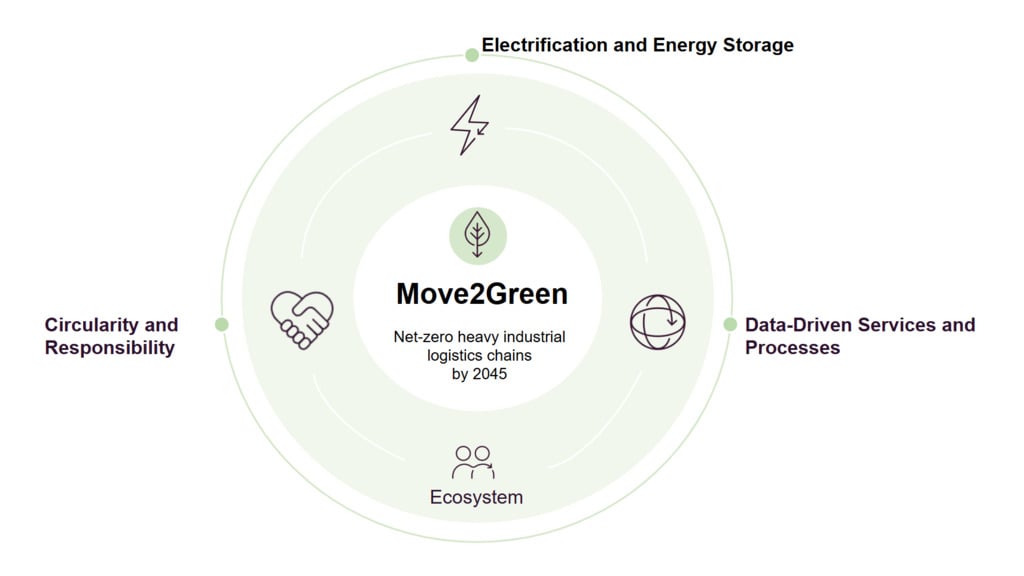
Achieving net-zero logistics chains in ports, terminals, and heavy industrial logistics by 2045 is the bold vision of Kalmar’s Move2Green R&D program. How do we turn this vision into reality? One key component is developing new circular and responsible solutions together with our ecosystem partners.
Driving Circularity and Responsibility
Circularity is key to reducing ecological pressure. By redesigning systems to eliminate waste and keep materials in use indefinitely, we can tackle raw material emissions, reverse biodiversity loss, and strengthen resource supply resilience. At the same time, a circular economy unlocks new business opportunities for innovation and sustainable, profitable growth.
“We have already done a lot to support our sustainability goals, but looking at every product and service through a circular economy lens is still new for us. Within the Circularity and Responsibility theme, we want to integrate circular economy principles and lifecycle thinking into the solutions we develop within the Move2Green program. We drive new circular business models and customer value by extending equipment lifecycles. We aim to advance a modular, design-to-service approach, alongside predictive maintenance and upgrades, to maximise equipment uptime and increase their lifecycle, e.g by refurbishing operations,” says Oskari Koskela, Senior Strategy Analyst at Kalmar and co-leader of Circularity and Responsibility theme.
Next, we will explore the key focus areas related to this theme.
Designed to last
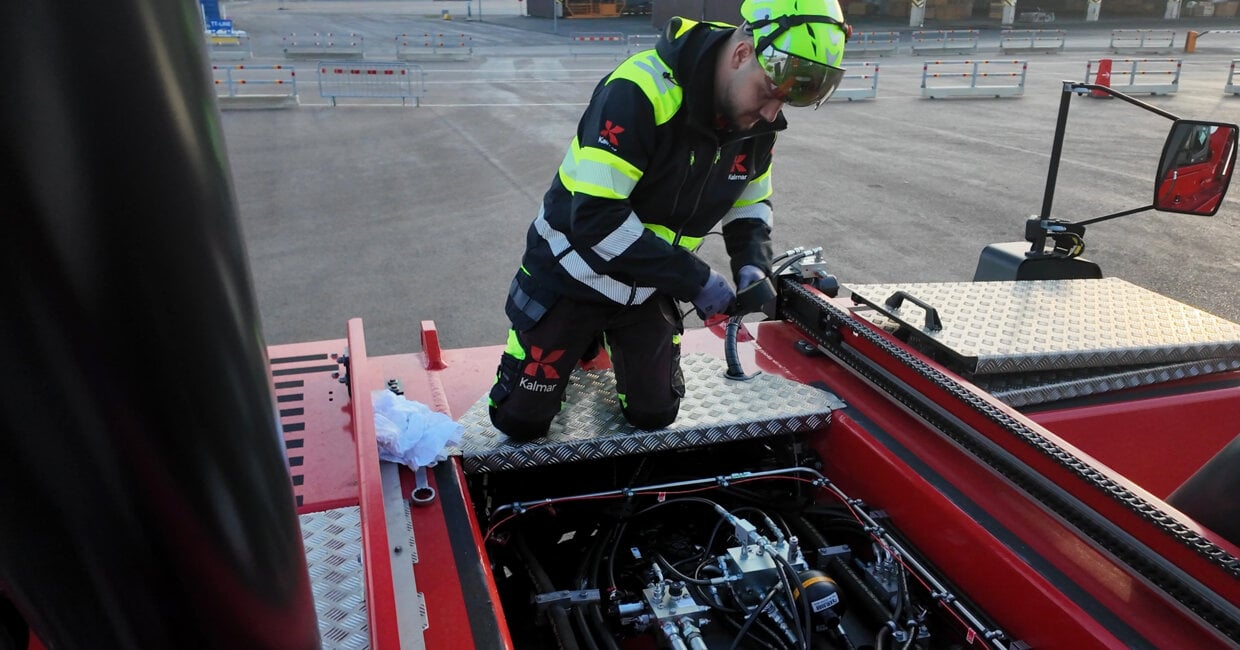
At Kalmar, we believe that sustainability starts on the drawing board, and we are shifting our mindset to a modular design-to-service approach. Engineering machines intelligently from the start, enabling easy repair, disassembly, and predictive maintenance, will extend their life, minimising waste and reducing emissions. This approach also opens doors for new services like refurbishment and rental business.
Modularity is strongly linked to design-to-service, and a co-enabler for full lifecycle management. We are working to increase our use of standardised platforms that are easily interchanged, upgraded, or replaced across our machines. This will reduce downtime, drive cost efficiency in production and maintenance, and provide easier upgrades for our customers.
Maximising the equipment lifecycle value
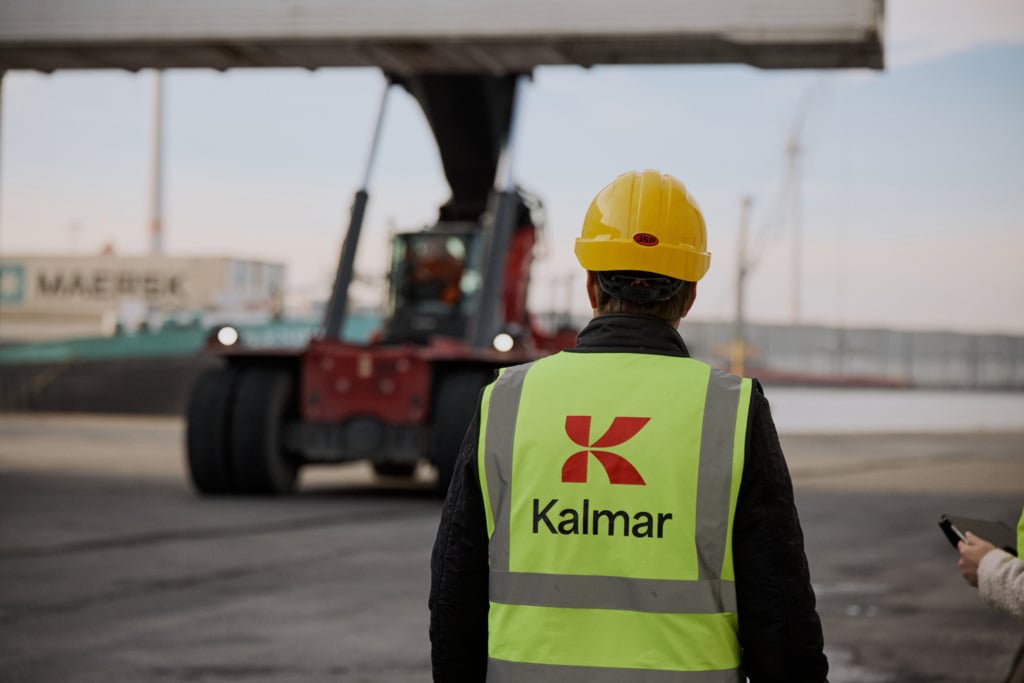
Equipment lifecycle management converts one-off machine purchases into sustainable, long-term partnerships. Modernising existing equipment rather than replacing it reduces waste, conserves resources, and lowers carbon footprint. This approach also lowers total cost of ownership for customers through optimised uptime, while securing recurring service and modernisation growth.
Managing and utilising equipment's full lifecycle, including its second and third life, drives sustainability and creates new service opportunities. We already offer many lifecycle solutions, like used equipment, rental, modernisation and refurbishment. Within Move2Green, we are looking for new business opportunities, such as solutions to take back old machines that cannot be upgraded or refurbished, to recover critical components and circulate usable parts. This would reduce the need for virgin materials and lower supply chain risks.
Join us to drive net-zero logistics chains
Within the Move2Green program, we are investigating new business models related to circularity and customer value. We are already working on some ecosystem projects, but we are looking for more partners.
For example, we are looking at how to manage the whole lifecycle: maintaining machines, taking them back, repairing them, renting them to another customer, and when the machine has served its full life, scrapping it to reuse materials and components. Another example is battery recycling. The EU Battery Regulation is setting stricter rules, and we are looking for ideas and partners to help us take back used batteries, deciding how best to reuse them or recycle them to recover valuable raw materials for new batteries.
Do you want to join us to drive net-zero logistics chains in ports, terminals, and heavy industrial logistics by 2045?
Read more on our website.
Related articles
Further reading
Subscribe and receive updates in your email
Subscribe