


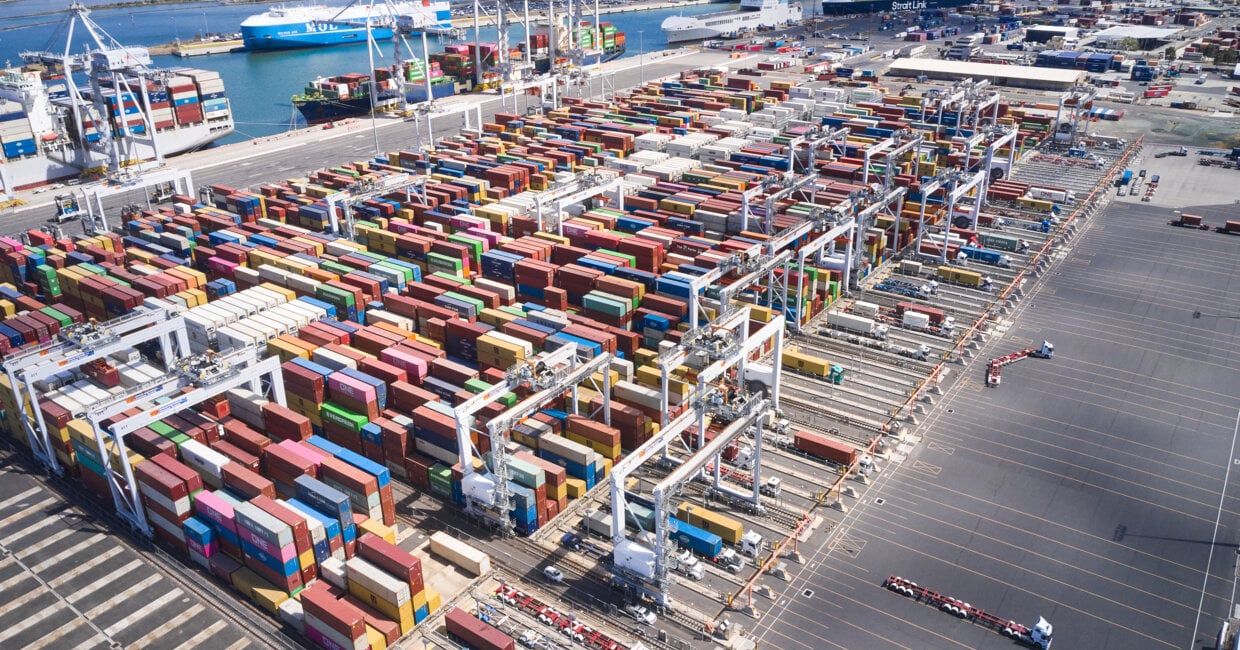
Introducing twin-lift capability: Heavy-duty AutoStrad performance at VICT
Key takeaways
- Close collaboration between VICT and Kalmar resulted in the development of a heavy-duty 60-tonne AutoStrad, now part of Kalmar’s manual and automated portfolio and designed to improve ship-to-shore productivity in high-throughput environments.
- Four new Kalmar hybrid AutoStrads have been deployed at Victoria International Container Terminal in Melbourne, supporting VICT's expansion towards an annual handling capacity of more than 1.6 million TEU.
- The development builds on a long-standing partnership between VICT and Kalmar dating back to 2017, demonstrating how close customer collaboration can turn operational challenges into scalable solutions for the wider industry.
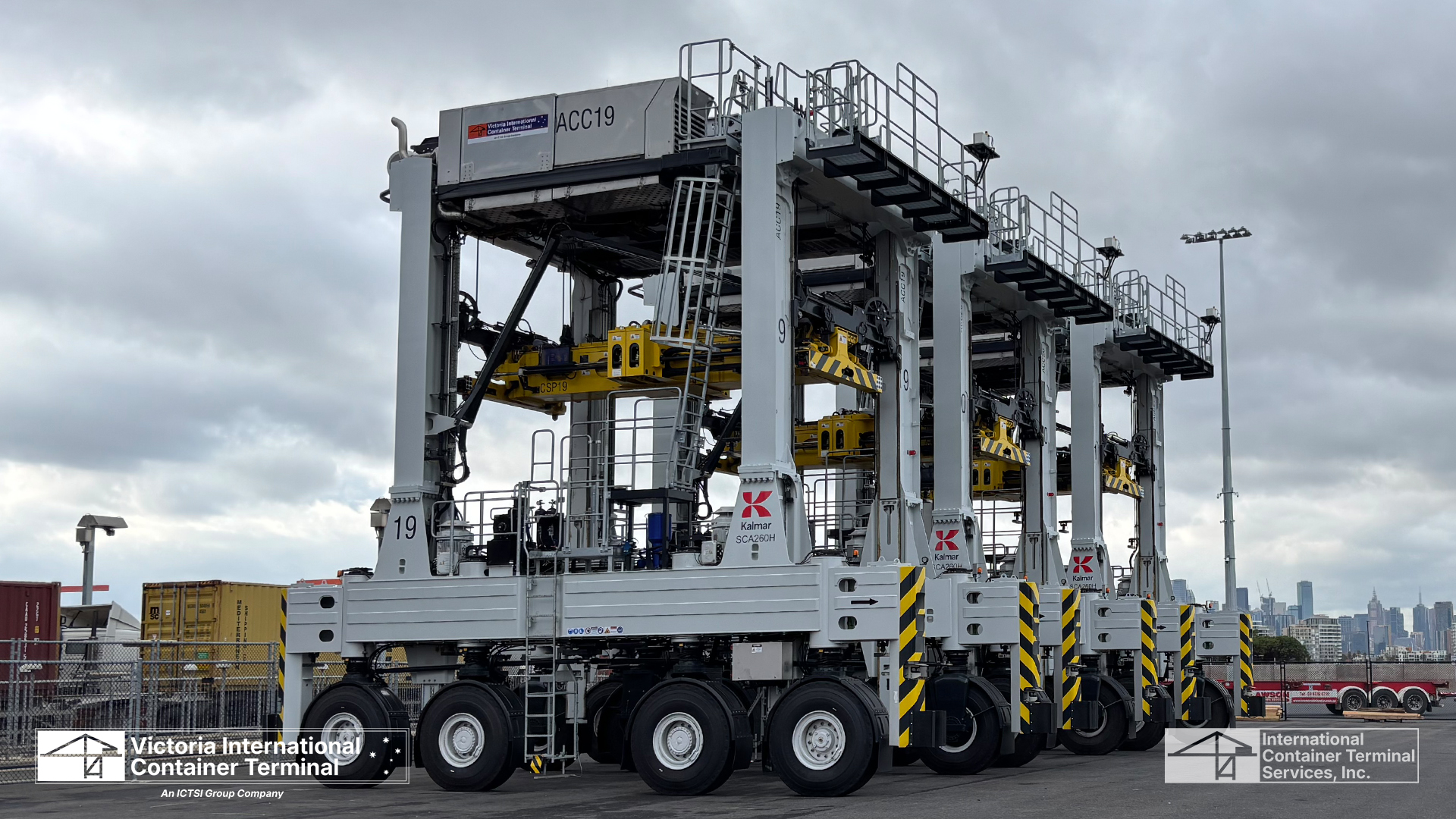
As container terminals continue to push for higher throughput, the ability to handle heavy twin container moves efficiently has become increasingly important. This need drove the joint development of advanced heavy-duty AutoStrad capability between Victoria International Container Terminal (VICT) and Kalmar, resulting in the recent deployment of four new hybrid AutoStrads at VICT’s terminal in Melbourne, Australia.
Victoria International Container Terminal (VICT) in Melbourne, Australia, was recently recognised with the ALC Productivity Partnership Award by the Australian Logistics Council, highlighting the terminal’s continued focus on technology and partnership for solving a real world problem, while also boosting productivity and sustainability. A key contributor to this achievement has been the close collaboration between VICT and Kalmar to address a critical operational challenge in high-throughput container handling.
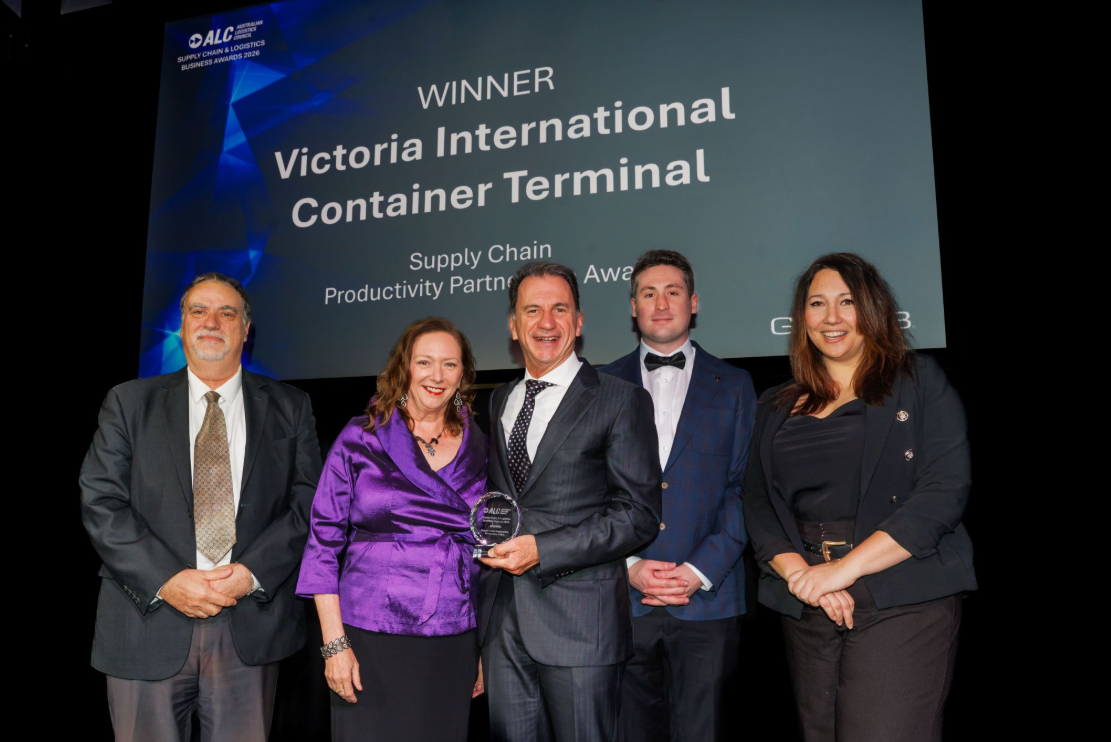
VICT accepting ALC Productivity Partnership Award May 2026.
As container terminals continue to push for higher productivity, the efficient handling of heavy twin container moves has become increasingly important—especially in Australia, where 20-foot containers can weigh up to 30 tonnes each. In such conditions, twin-lift operations can reach 60 tonnes, placing significant demands on horizontal transport equipment.
Traditionally, this has created a bottleneck at the quay. Standard straddle carriers are not designed to handle continuous 60-tonne twin lifts, requiring ship-to-shore (STS) cranes to wait while containers are split into separate moves. Typically this can lead to reduced crane productivity, increased yard congestion and lower overall efficiency.
To address this, Kalmar and VICT worked closely together to analyse peak operational demands and identify a scalable solution.The collaboration resulted in a heavy-duty 60-tonne straddle carrier designed to meet both automated and manual operational requirements.
Four new hybrid AutoStrads have now been deployed at VICT and are built to support continuous twin-lift operations at loads of up to 60 tonnes. This sustained capability enables seamless handling of heavy twin containers, reducing delays at the quay and improving the flow of containers between ship and yard. As a result, the solution contributes to increased ship-to-shore productivity and more efficient terminal operations overall.'
The machines are equipped with lithium-ion battery systems that recovers and reuses energy during operations, the machines also support more efficient energy use. This results in up to a 40 percent improvement in energy efficiency and a reduction of up to 50 tonnes of CO₂ emissions per unit annually.
Following a successful commissioning and operational integration process, the project was formally celebrated with a handover ceremony at the terminal on 26 May. Representatives from both VICT and Kalmar attended the event, including Kalmar President and CEO Sami Niiranen, reflecting the close collaboration behind the project and the long-standing partnership between the two companies.
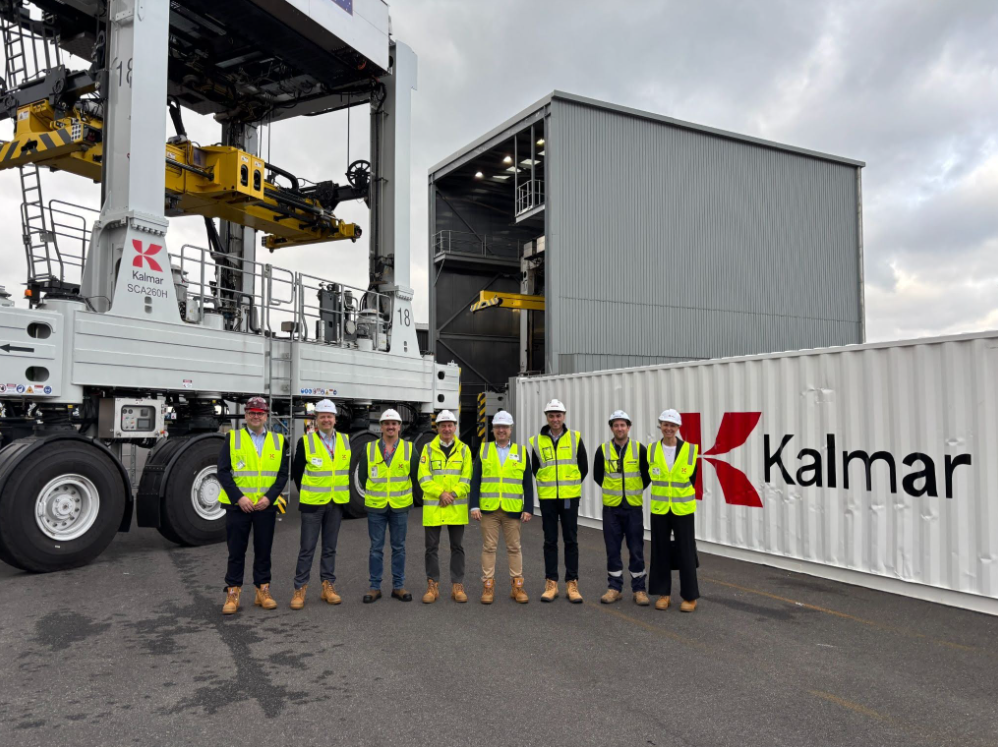
Bruno Porchietto (fourth from left), VICT chief executive officer, and Sami Niiranen (fifth from left), Kalmar chief executive officer, with other VICT and Kalmar personnel during the official handover of the new automatic container carriers.
The deployment of the new automated straddle carriers is part of VICT's ongoing expansion programme aimed at increasing the terminal's annual handling capacity to more than 1.6 million TEU. As the only fully automated container terminal in the Southern Hemisphere, VICT continues to invest in technologies that help improve operational efficiency while supporting long-term sustainability goals.
For VICT, the investment reflects a broader commitment to future-proofing terminal operations.
“These new AutoStrads strengthen our landside capabilities while supporting our long-term sustainability goals. This investment reflects our commitment to expanding terminal capacity, improving efficiency and adopting technologies that lessen the environmental impact of our operations. We appreciate the successful partnership with Kalmar, which has enabled us to set a high standard of port operations in Australia,” says Bruno Porchietto, Chief Executive Officer of VICT.
The project also marks another milestone in the long-standing collaboration between VICT and Kalmar, which dates back to the start of terminal operations in 2017.
“This project builds on our long and successful history of cooperation with Victoria International Container Terminal,” says Karri Keskinen, Head of Oceania at Kalmar. “The new straddle carriers will help increase productivity and support the terminal in meeting customer needs in a reliable way.”
As VICT continues its expansion journey, the addition of the new hybrid AutoStrads demonstrates how close customer collaboration can drive practical innovation—solving real operational challenges while shaping solutions that can be scaled across the industry.
Related articles
Further reading
Subscribe and receive updates in your email
S'inscrire à nos publications